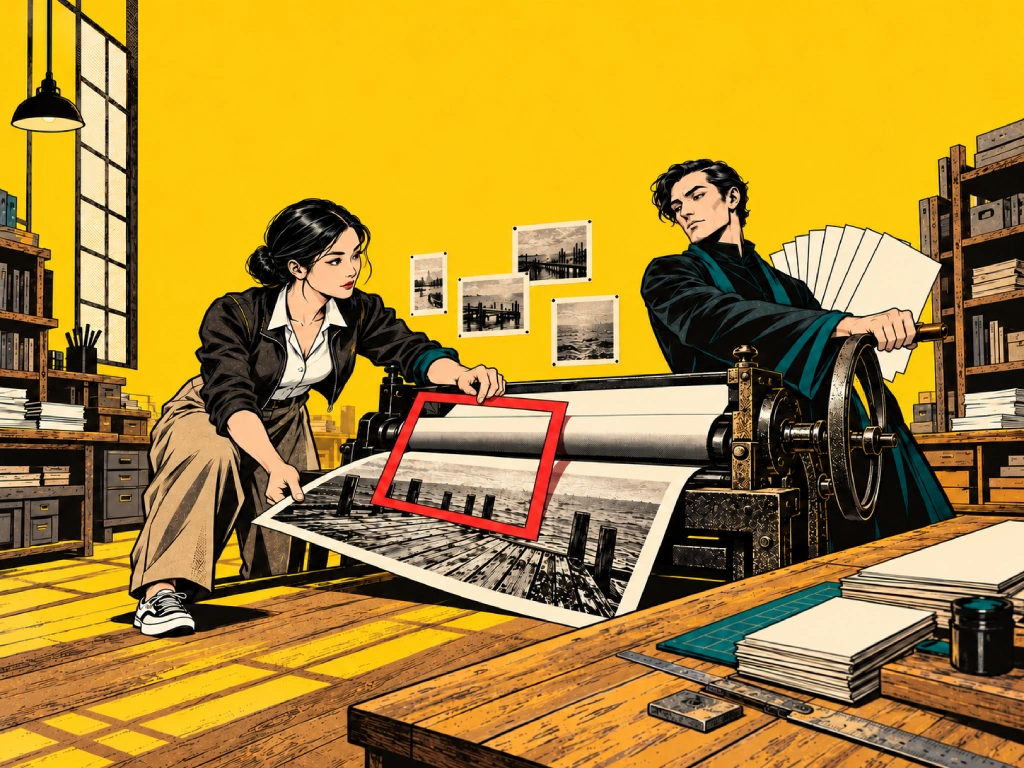
A search for a PM Heroes story began with a random page about János Kender, a Hungarian photographer. Following his work with Harry Shunk led to Pier 18, a run-down waterfront site in Lower Manhattan. In 1971, curator Willoughby Sharp commissioned 27 artists to make performances there. The site had no room for viewers. Shunk and Kender’s photographs were the way the public encountered the work.
That trail suggests a project question: when people can only know work through its record, who decides what that record must show? The question is a lead.
Begin somewhere that can surprise you
There are at least three entrances. Read today’s news and shortlist events with a promise, a dependency or a change affecting someone. Read a diary for a missed handover, an unexpected workaround or a decision that felt harder than it should. Or ask WikiRoulette for a random page, follow one concrete detail and refresh if no plausible project question emerges. An inquiry, a form, a rota or an unanswered question from an earlier post can serve the same purpose. Starting with a keyword would select from questions already expressed as searches; these entrances may reveal ones that have not been named.
The entrances carry different limits. Breaking news can be too early to explain a cause. A diary records an experience, not its frequency. An inquiry has a remit. Wikipedia can introduce a name or a trail, but the article’s claims must be checked against better sources. None of the starting points guarantees an angle.
Follow the detail, then change the question
For this draft, WikiRoulette produced Kender’s page. MoMA’s account of Shunk-Kender says the photographers sometimes documented works and sometimes helped make them. The Met’s account of Pier 18 says Sharp commissioned the artists and the site could not accommodate viewers, so their actions were communicated through photographs. Those museum accounts establish the commission and the audience constraint. They do not establish a budget, schedule or detailed instructions to the artists and photographers.
The trail also reaches Yves Klein’s Leap into the Void. The Met says Klein hired Shunk and Kender to recreate a jump, friends held a safety tarpaulin, two negatives were printed together and Klein distributed the image in a mock newspaper at Paris newsstands. MoMA credits the photomontage to Shunk-Kender. This is another candidate for the question about the record, with an important difference: the final image shows a leap without the protection used in its making. The accounts give real decisions about staging and distribution, though not a complete account of approvals or day-to-day work.
A random subject doesn’t itself reveal a management lesson. The editor supplies the connection by noticing a constraint and asking who made a decision under it. Here the constraint was that the audience could not fit on Pier 18. The possible decision question concerns how a record was commissioned, made and presented when it was the audience’s only route to the work. That is a hypothesis to investigate.
Check whether the answer would be new
A fresh setting can repeat an old answer. When the Plan Is Really a Target, asks how to tell whether a plan describes a credible route to completion. Its Crossrail case shows an aspirational plan being used as a poor test of work remaining. The Pier 18 lead asks how work is carried to an audience through a record designed for that purpose. The Klein lead, where a constructed image differs from the event as staged concerns a document and the reality behind it. The distinction must survive the finished argument.
Next ask what the sources can support and what the reader can use. The museum accounts show why photographs were central to Pier 18 and how the Klein image was made and circulated. They cannot alone establish a transferable rule for planning a project. Records of Sharp’s commission, the artists’ instructions and the photographs’ first presentation would help test the Pier 18 question. If those records do not answer it, narrow or park that lead.
Give each lead a decision
A short note is enough: starting point, concrete detail, proposed decision question, strongest source found, nearest existing PM Heroes answer, and next evidence needed. Mark the lead ready to research, revisit when evidence appears, or reject because the connection is thin or the answer duplicates another post. For a random page, refresh when the trail offers no decision or no credible source. Stop the session when one lead has a testable question and a plausible evidence path, or when the time set aside for searching is up.